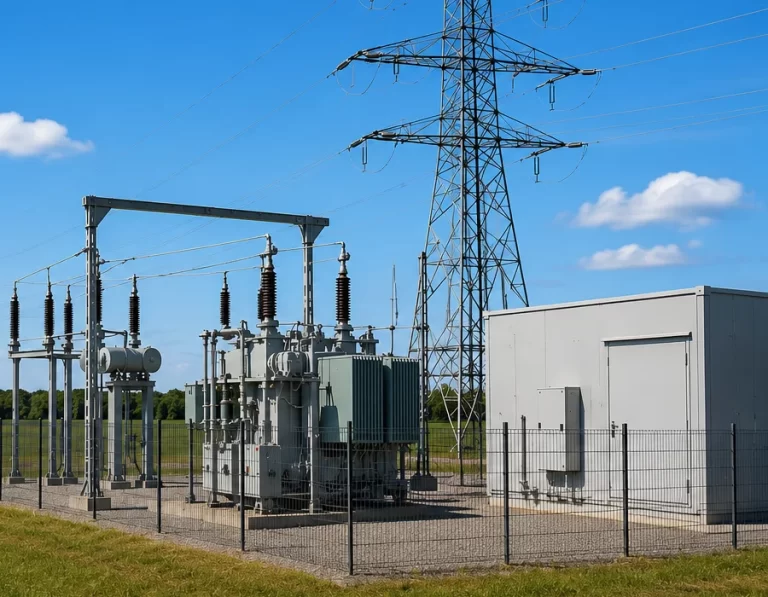

BESST Engineering helps manage BESS GPS approval risks with independent technical reviews for grid-connected projects across Australia before energisation.
Generator Performance Standards are a critical part of connecting and registering a battery energy storage system in the National Electricity Market, and understanding BESS GPS approval risks early can help prevent costly delays. These standards define how a BESS must respond to voltage changes, frequency events, faults and other network conditions. BESS approval readiness is not a single approval document but the alignment of the connection agreement, performance standards, R1 capability evidence, registration requirements and the commissioning program.
What Generator Performance Standards Risks Can Delay BESS Approval?
One of the most common risks is committing to performance standards that the final equipment cannot reliably meet. Inverter capability, reactive power, fault ride-through, frequency response and control behaviour must be supported by the selected plant design rather than preliminary supplier information alone. A structured GPS preparation process for the NEM can help project teams align performance commitments, modelling assumptions and supporting evidence before submission.
Late changes to inverters, firmware, transformers or the power plant controller may also affect earlier studies and require updated models, technical evidence or connection assessments. These changes should be reviewed before they undermine the technical basis accepted by AEMO or the relevant Network Service Provider.
Key BESS GPS Approval Risks in Models and Technical Evidence
Strong technical evidence is essential because AEMO and the relevant Network Service Provider must be confident that the proposed BESS will perform as expected. Weak, incomplete or inconsistent documentation can trigger further questions, revised studies and delays to registration or commissioning.
- Inconsistent RMS and EMT models: Different controller settings, current limits, protection logic or disturbance responses can undermine confidence in the submitted results.
- Models that do not represent the final plant: Preliminary models may not reflect the installed inverter quantities, firmware, transformer data, plant controller settings or auxiliary systems.
- Incomplete operating scenarios: Studies should consider charging, discharging, low and high state of charge, weak-grid conditions and control-mode transitions where relevant.
- Overstated reactive power capability: Nameplate data may not account for transformer losses, inverter current limits, temperature effects or voltage restrictions at the connection point.
- Weak fault ride-through evidence: Protection settings, current limiting and active power recovery should be assessed together to demonstrate that the plant can meet its applicable performance standards.
- Poor system strength assessment: Outdated network assumptions or limited weak-grid studies can hide stability and control interaction risks.
- Uncontrolled design changes: Equipment substitutions or firmware updates introduced after studies are completed can make previous results unreliable.
- Incomplete R1 capability evidence: Missing design data, unresolved technical discrepancies or models that do not represent the final equipment can delay AEMO’s capability assessment and subsequent registration.
How Can Project Teams Improve BESS Approval Readiness?
Project teams should maintain a clear register linking each performance standard to the relevant study, model, equipment requirement, supplier commitment and approval status. This creates a reliable evidence trail and helps identify BESS GPS approval risks before they affect the project schedule. Formal change control should also be applied to equipment, firmware, protection settings, control logic and plant configuration, while R1 evidence and commissioning plans are prepared progressively in line with AEMO’s construction-stage connection requirements.
Reduce BESS GPS Approval Risks With BESST Engineering
A well-prepared project aligns its agreed performance standards with the final equipment, current model package and planned commissioning evidence. BESST Engineering provides independent technical review to identify gaps before they lead to repeated information requests, registration restrictions or energisation delays. Addressing BESS GPS approval risks early gives project teams a stronger basis for timely approval and reliable operation.
Contact us to arrange an independent review of your BESS approval documentation and technical evidence.